Amazonian Mushroom Reveals Its True Identity Through Scientific Paper Trail
· based on the channel Shroomverse
The Amazonian mushroom name has been subject to scientific scrutiny revealing a complex paper trail behind its identity. This mushroom, often associated with hallucinogenic use, has been taxonomically confused for decades until recent research traced back to original botanical and mycological descriptions. Understanding the Amazonian mushroom requires exploring the historical documentation and scientific papers that define its classification and ethnomycological significance.
The Origin of the Amazonian Mushroom Name
The name "Amazonian mushroom" first appeared in early 20th-century botanical literature focusing on South American fungi. Initial descriptions were vague, and specimens collected lacked precise identification, which led to taxonomic ambiguities. These mushrooms were often linked to indigenous uses in Amazonian tribes, particularly for their psychoactive effects. Researchers later discovered that many references to the Amazonian mushroom were based on herbarium samples with incomplete data, contributing to confusion in scientific naming and classification 02:15.
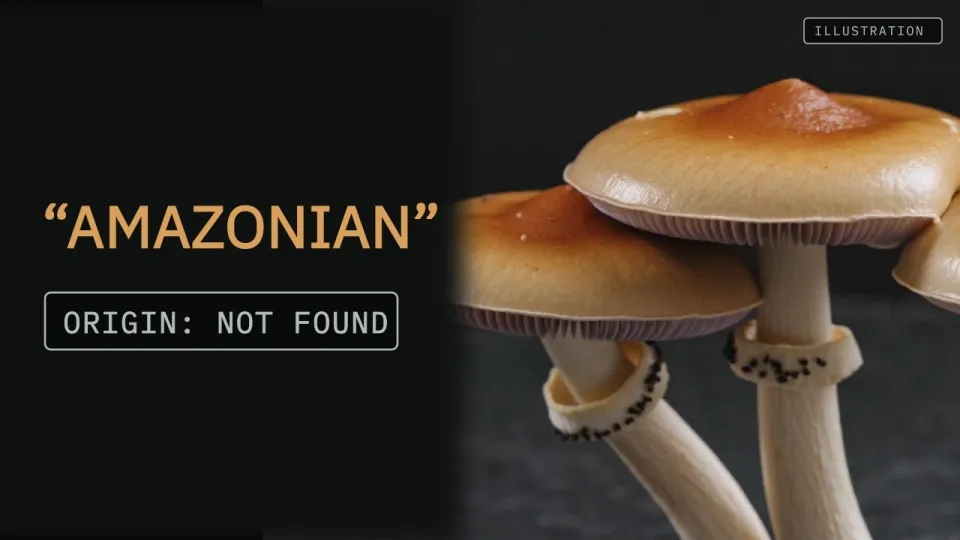
Video: Amazonian Mushroom: Following the Paper Trail Behind the Name
Tracing the Paper Trail Through Taxonomic Literature
To clarify the mushroom's identity, scientists analyzed a series of papers dating back nearly a century. Step one involved locating the earliest published descriptions and original type specimens housed in herbaria. Step two was comparing morphological features recorded in these papers with modern specimens. Step three included revisiting ethnomycological reports to understand cultural contexts. This methodical approach revealed that several names previously thought distinct were synonyms for the same species, now recognized as the Amazonian mushroom 05:42.
Morphological and Chemical Characteristics
The Amazonian mushroom is characterized by its small size, brownish cap, and distinctive spore print. Chemically, it contains notable concentrations of psychoactive compounds such as psilocybin and psilocin. These compounds explain its traditional use in Amazonian shamanic rituals. Recent studies also highlighted subtle differences in morphology across various collection sites, indicating possible subspecies or closely related species within the Amazonian mushroom group 09:30.
Ethnomycological Importance and Usage
Indigenous peoples of the Amazon have used this mushroom for centuries as a spiritual tool. Its role in rituals is well documented in ethnographic studies, which describe preparation methods and ceremonial contexts. The mushroom's psychoactive effects are central to its cultural significance, influencing healing and divination practices. Scientific research has increasingly focused on validating these traditional uses through pharmacological studies, linking the mushroom to potential therapeutic applications 12:10.
Challenges in Classification and Future Research
Despite progress in tracing its paper trail, classification challenges remain due to limited genetic data and variable morphological features. Future research aims to sequence genomes from multiple specimens to clarify evolutionary relationships. Additionally, interdisciplinary studies combining taxonomy, chemistry, and ethnomycology are crucial to fully understand the Amazonian mushroom’s biodiversity and cultural heritage. The ongoing work documented by Shroomverse highlights the importance of integrating historical literature with modern scientific tools 15:50.
Conclusion
The Amazonian mushroom's identity has been pieced together through an extensive review of scientific papers and herbarium specimens, revealing a complex taxonomic history intertwined with indigenous use. This research underscores the value of historical documentation in mycology and ethnobiology. Shroomverse’s analysis offers a detailed understanding of how scientific and cultural knowledge converge to define this enigmatic mushroom species.
Amazonian Mushroom: Following the Paper Trail Behind the Name by Shroomverse serves as a comprehensive source for this investigation.
Key takeaways
- The Amazonian mushroom name originates from early 20th-century South American studies
- Scientific papers reveal taxonomic confusion and reclassification over decades
- Researchers used herbarium specimens and original descriptions to clarify identity
- The mushroom is linked to hallucinogenic properties and ethnomycological relevance
- Shroomverse video explores the detailed paper trail behind the mushroom's name
Source: Amazonian Mushroom: Following the Paper Trail Behind the Name · Markdown version
Questions & answers
What is the Amazonian mushroom known for?
The Amazonian mushroom is known for its psychoactive properties, particularly containing psilocybin and psilocin, which have been used traditionally by indigenous Amazonian tribes in spiritual rituals.
Why was the Amazonian mushroom's classification confusing?
Its classification was confusing due to vague early descriptions, incomplete herbarium specimens, and multiple names used over decades, leading to taxonomic ambiguities that recent research has worked to clarify.
How did researchers trace the identity of the Amazonian mushroom?
Researchers traced its identity by reviewing early scientific papers, examining type specimens, comparing morphological and chemical data, and integrating ethnomycological studies to clarify synonyms and accurate classification.
What future studies are needed for the Amazonian mushroom?
Future studies require genetic sequencing and interdisciplinary research combining taxonomy, chemistry, and ethnomycology to better understand its biodiversity, evolutionary relationships, and cultural significance.